2026-09-20 · Daniel Mercer
How To Move Large Furniture Through Narrow Doorways
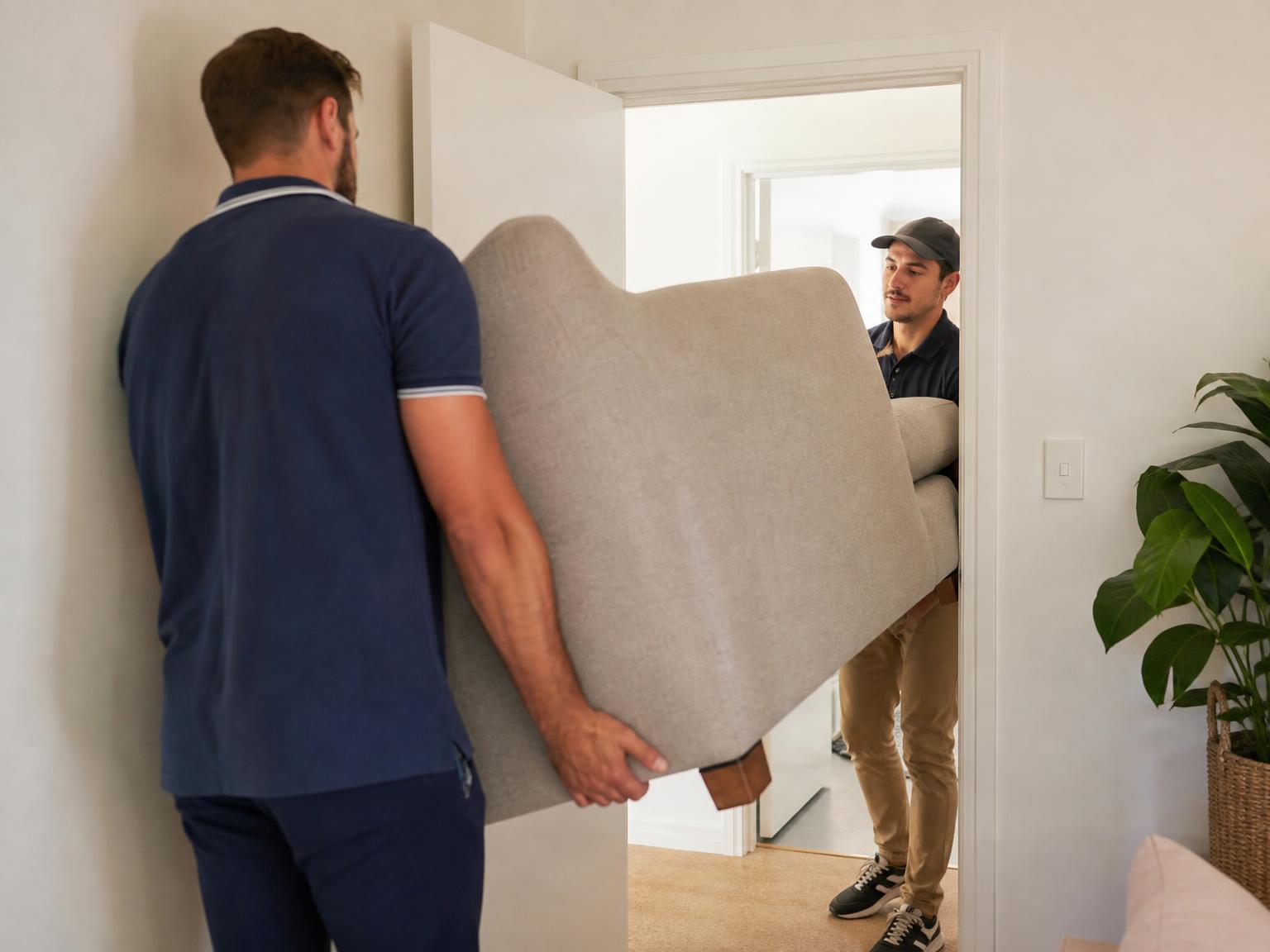
# How To Move Large Furniture Through Narrow Doorways
To move large furniture through a narrow doorway, measure the item and the complete access path, remove detachable parts, protect vulnerable surfaces, then turn and tilt the piece so its smallest rigid dimensions pass through first. Allow at least 20–30 mm of practical clearance rather than assuming an exact dimensional match will work; hands, padding, hinges and uneven floors all consume space. Sofas often pass upright with the back leading, while wardrobes and tables are generally safer after controlled disassembly. If the item cannot clear the door frame without force, stop and reassess rather than risking damaged furniture, walls or fingers.
Measure The Furniture And The Entire Route
Measure the furniture at its widest, highest and deepest fixed points, ignoring cushions or legs that can be removed. For a sofa, record the arm-to-arm width, floor-to-top height and front-to-back depth; then measure diagonally from a rear bottom corner to the opposite top edge. That diagonal helps determine whether the sofa can be stood on end and rotated through the opening.
Next, inspect more than the doorway itself:
- Measure the clear opening with the door swung fully back.
- Account for handles, hinges, flyscreens and security doors.
- Check hall width, ceiling height and the space available to rotate on both sides.
- Measure stair landings, lift doors and internal corners.
- Identify fixed obstacles such as balustrades, light fittings and built-in cupboards.
This route check is particularly important in older cottages and terrace-style homes around North Adelaide and the Adelaide CBD, where a generous front room may sit behind a narrow entrance or short hallway. Apartment moves can add lifts, shared corridors and loading restrictions, making experienced Apartment Removalists useful when the route has several tight transitions.
Remove Parts Before Applying Force
Disassembly should be the first solution, not the last attempt after a frame has been scraped. Remove sofa feet, loose cushions, bed rails, table legs, shelves, drawers and wardrobe doors where the manufacturer’s construction permits it. A set of 50–100 mm legs can be the difference between a clean turn and a jammed sofa, while taking drawers out reduces both weight and the chance of them sliding open during a tilt.
Photograph brackets and hardware before separating anything. Put screws, washers and fittings into labelled bags, then tape each bag to a removable component rather than directly to a finished surface. Do not dismantle glued joints, antique frames or unfamiliar reclining mechanisms simply because screws are visible; some fittings control tension or alignment.
Wrap disassembled panels individually and keep them upright against a stable surface. For valuable or delicate pieces, Antique Furniture Removalists can assess whether disassembly is appropriate. Flat-pack furniture also needs care because repeated assembly can weaken particleboard around cam fittings and screw holes.
Use The Right Turning Technique
Clear the route completely and assign 1 person to lead and 1 person to follow for a typical 2-person lift. Agree on commands such as “lift,” “stop,” “lower” and “rotate” before moving. The lead person should watch the opening and hand clearance; the person moving backwards should not be expected to judge both the furniture and unseen trip hazards.
For a sofa, stand it carefully on one end, feed the upper back corner through first, then rotate the lower section around the jamb in a controlled hooking motion. A table generally moves edge-on after its legs are removed. Tall cabinets should remain as upright as the route permits because laying them flat can stress doors, backs and internal joints.
Never twist while carrying full weight. Lower the item onto a furniture blanket or dolly, reset foot position, and then continue. Sliders can help on level internal floors, but they are not substitutes for lifting across thresholds or stairs. Large, awkward pieces may warrant Heavy Item Removalists, particularly where weight prevents a safe pause and reset.
Protect The Doorway, Floors And Furniture
Protection must be thin enough to preserve clearance but substantial enough to absorb contact. Use moving blankets secured around the furniture, then apply corner guards or folded cardboard to door jambs. Avoid loose plastic wrap around the carrying surfaces because it can make handholds slippery, especially during Adelaide’s hot, dry summer conditions.
On timber or tiled floors, lay non-slip runners along the working path and secure their edges so they cannot bunch under a mover’s foot. During the City of Adelaide’s cool, wet winters, check verandas, steps and entrance tiles for moisture before lifting. Rain carried inside can turn smooth flooring into a slip hazard, so dry the route rather than trying to rush between showers.
Properties near South Terrace or the Botanic Garden may combine front steps, narrow side access and established landscaping, while CBD access near Rundle Mall or the South Australian Museum can involve longer carries from the available loading point. Padding should therefore remain fitted until the item reaches the truck, not merely until it clears the front door. Additional transit preparation is covered in this guide to protecting belongings over Adelaide’s rough roads.
Know When To Stop And Change The Plan
Stop if the furniture binds against both sides of the opening, flexes visibly, becomes unstable when tilted or leaves movers without secure hand positions. Pushing harder rarely creates usable clearance. Recheck whether a door can be lifted from its hinges, but first confirm that doing so is permitted and that the door can be safely supported; solid doors can be unexpectedly heavy.
Alternative plans may include professional disassembly, balcony access assessed by specialists, or moving the item through a wider rear entrance. Windows should never be removed casually, and furniture must not be lowered from height using improvised rope. Tight stairs, glass panels, overhead cables and public footpaths all require a controlled method rather than experimentation.
This judgement applies across North Adelaide, Kent Town and Unley, as well as central addresses near Adelaide Oval. Access differs even between neighbouring properties, so measurements and photographs are more useful than assumptions based on the street. If help is needed for a single sofa, cabinet or dining table, Single Item Removalists are the relevant service rather than booking an entire household move.
Prepare For A Safer Moving Day
Before lifting, place pets and children in a separate room, prop approved doors securely, remove rugs and ensure the truck route is unobstructed. Keep tools, hardware bags, blankets and a tape measure together so the item is not left balancing in a doorway while someone searches for equipment. In summer, schedule strenuous carrying away from the hottest part of the day where possible; in winter, allow time to dry wet access points.
A final 3-point check prevents most avoidable problems: confirm the item dimensions, confirm the narrowest point on the route and confirm that every mover has a safe handhold. If any point fails, dismantle further or choose another path before lifting.
Best Removalists Adelaide is based at 15 Davenport Tce, Wayville SA 5034, close to Adelaide, Unley and the inner-city suburbs. The business operates Mon–Sun, 7am–9pm. Whether using professional Movers or handling the task independently, the sound method remains the same: measure first, reduce the item where appropriate, protect the route and never use force to compensate for inadequate clearance.