2026-09-20 · Daniel Mercer
How To Protect Your Belongings When Moving Over Adelaide’s Rough Roads
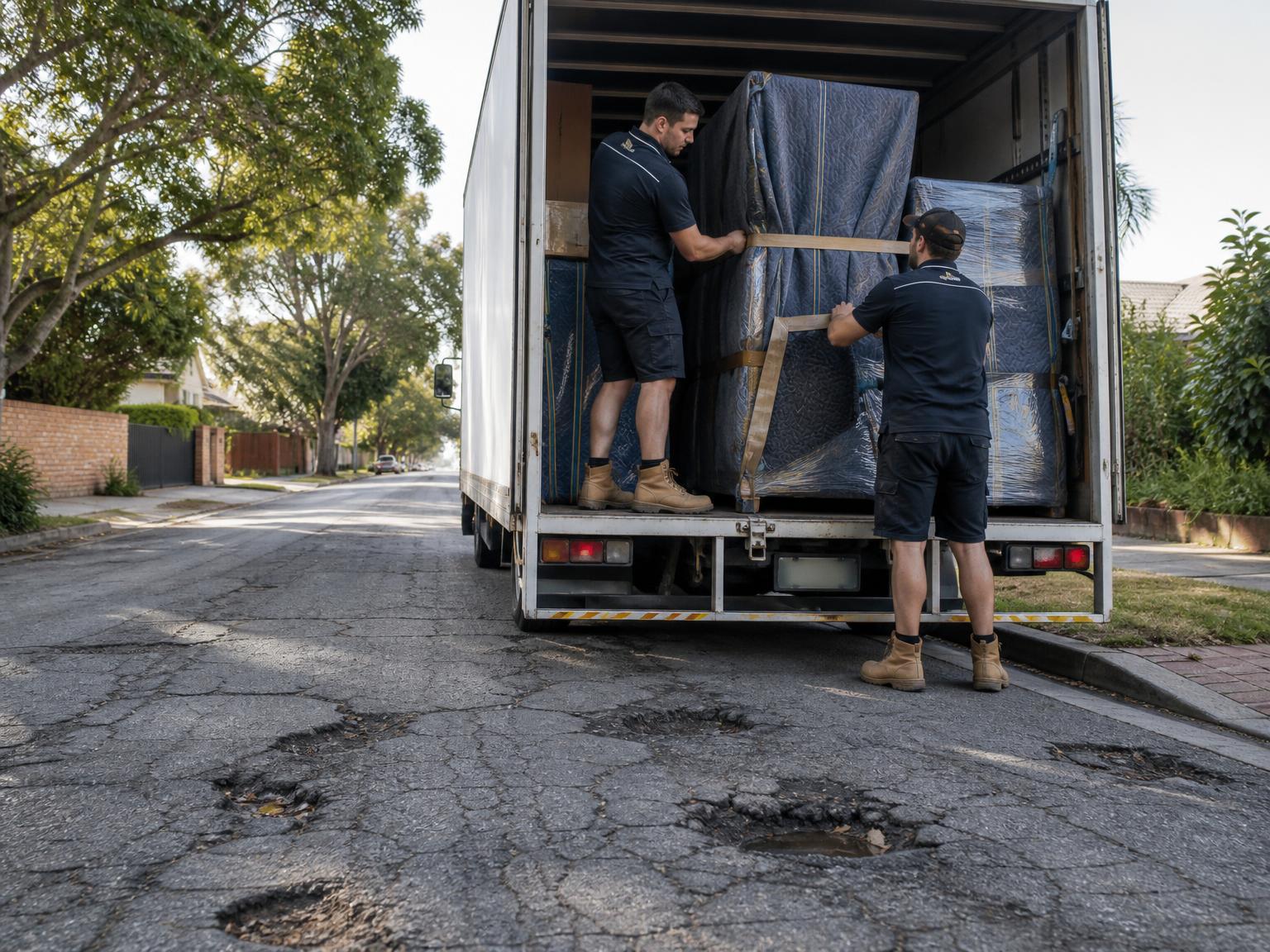
Protect belongings on Adelaide’s rough roads by controlling movement, vibration and pressure at every stage: use rigid cartons, leave no empty space inside them, wrap furniture with padded blankets, and secure the truck load in tight sections. Allow at least 5 cm of cushioning around fragile objects and keep each standard moving carton below roughly 20 kg so it can be handled without dropping or crushing weaker boxes. Road shocks rarely damage a properly immobilised item; trouble starts when a loose object gains momentum, strikes another item or carries too much weight above it.
Pack For Repeated Vibration, Not Just A Single Bump
A trip across Adelaide can combine patched road surfaces, raised entries, lane changes and hard braking in traffic. Even when no individual impact seems severe, repeated vibration can loosen shelves, rub timber finishes and move glassware towards the wall of a carton. Pack each box so that a gentle shake produces no rattling or shifting.
Use these layers for breakables:
- Line the base with 5–8 cm of crumpled packing paper or another resilient material.
- Wrap each piece separately rather than wrapping several glasses together.
- Place heavier pieces at the bottom and keep glass away from carton walls.
- Fill every side gap and finish with another cushioned layer on top.
- Mark the carton Fragile, This Way Up and with its destination room.
Avoid relying on towels alone around delicate glass. Fabric compresses and can leave hard edges exposed after several jolts. For artwork, mirrors, ceramics or collections that need item-specific protection, professional Fragile Item Removalists can match the wrapping and carton type to the object.
Prepare Furniture Before It Reaches The Truck
Furniture should be made smaller and structurally stable before carrying begins. Remove shelves, drawers, glass panels, feet and detachable legs where practical, then place fittings in labelled zip bags. Tape the bag to a wrapped component or put all hardware in a clearly identified parts carton; do not attach adhesive directly to polished timber, leather or painted surfaces.
Older cottages and terrace-style homes around North Adelaide can have narrow passages, tall thresholds and tight turns. In apartments near Adelaide CBD and around South Terrace, lifts, corridors and loading access may impose different limits. Measure the item, doorway, lift opening and turning space before forcing anything through. A difficult carry can weaken a joint before the road journey even starts.
Cover timber and upholstered pieces with padded moving blankets, then secure those blankets without letting straps bite into corners. Protect exposed edges with rigid corner guards. If dismantling wardrobes, bed frames or tables is unfamiliar, Furniture Removalists can manage the sequence from doorway protection through to truck placement.
Build A Load That Cannot Shift
A removal truck should be loaded as a series of compact, restrained sections rather than one open pile. Place dense, stable furniture and strong cartons low and towards the front of the load area. Keep fragile cartons above heavier boxes, stand mattresses in protective covers along a side only when they can be restrained, and never use televisions or mirrors to fill unsupported gaps.
The practical rules are straightforward:
- Keep the weight balanced from left to right.
- Use tie-down points and straps at regular intervals.
- Place soft, protected items between hard surfaces where rubbing is possible.
- Keep castors, sharp feet and metal edges away from upholstery.
- Do not stack anything on a carton that bows when pressed.
Whitegoods need special attention. Fridges, washing machines and dryers should remain upright and be strapped independently, with doors secured according to the appliance requirements. Pianos, safes and similar concentrated loads require appropriate equipment and positioning; they should not be treated as ordinary furniture. Good loading protects the item while also preventing a heavy object from becoming a hazard during sudden braking.
Plan Around Adelaide Access And Road Conditions
The safest route is not automatically the shortest. Within the City of Adelaide, traffic near Rundle Mall, Adelaide Oval, the South Australian Museum and the Botanic Garden can create frequent stops, pedestrian activity and limited kerb access. A smoother approach with a suitable loading position is often preferable to saving a few minutes through tighter streets.
Check both properties before moving day. Identify low branches, steep driveway transitions, height restrictions, stairs, lift booking requirements and the distance from the vehicle to the entrance. Moves between Wayville, Unley, Kent Town, North Adelaide and Adelaide CBD can involve very different access conditions despite the short geographic distance. The route should also account for roadworks and events on the day rather than relying only on a familiar map.
For journeys extending beyond central Adelaide, vibration exposure lasts longer and load restraint becomes even more important. Readers travelling through steeper approaches can use this guide to Adelaide Hills access and weather. Recheck straps after the first safe stopping opportunity because blankets and cartons may settle once the vehicle is moving.
Adjust Protection For Heat And Rain
Adelaide’s Mediterranean conditions create 2 distinct packing risks: hot, dry summer weather and cool, wet winter conditions. During summer, avoid leaving vinyl records, candles, artwork, electronics and timber furniture inside a stationary vehicle longer than necessary. Heat can soften, warp or stress sensitive materials even when the road journey itself is short. Load these items late and unload them early, while keeping them out of direct sun at both properties.
In winter, keep cartons and furniture off wet paving and do not place damp blankets against timber or upholstery. Use clean floor runners at entrances, replace any soaked protective material, and close the truck between carrying stages during showers. Plastic covers can block rain during the short walk to the vehicle, but items should be dry before long-term wrapping or storage to avoid trapping moisture.
Schedule physically demanding carries for cooler periods where possible and keep drinking water accessible rather than buried in the load. For more seasonal planning, see the guide to moving safely during an Adelaide heatwave.
Complete A Final Protection Check
Before departure, walk through the load from front to rear and test every section by hand. Nothing should rock, slide or lean into a fragile object. Confirm that straps are tensioned against strong structural points, not glass, thin panels or decorative trim. Check that doors and drawers cannot open, loose power cords are contained, and the first items needed at the destination are accessible.
Keep a small move-day kit outside the main load with tools, spare tape, labels, corner protection, cleaning cloths and fasteners. Photograph valuable furniture before wrapping and record existing marks so its condition can be checked after unloading. At the destination, inspect cartons for crushing or punctures before stacking them indoors, and unpack fragile items on a stable surface rather than balancing them on other boxes.
Best Removalists Adelaide is based at 15 Davenport Tce, Wayville SA 5034 and operates Mon–Sun, 7am–9pm. Whether using professional Movers or handling the trip yourself, careful packing, measured access and a tightly restrained load provide the strongest protection against Adelaide road vibration.