2026-09-20 · Daniel Mercer
Moving House In Adelaide’s Hills: Access And Weather Tips
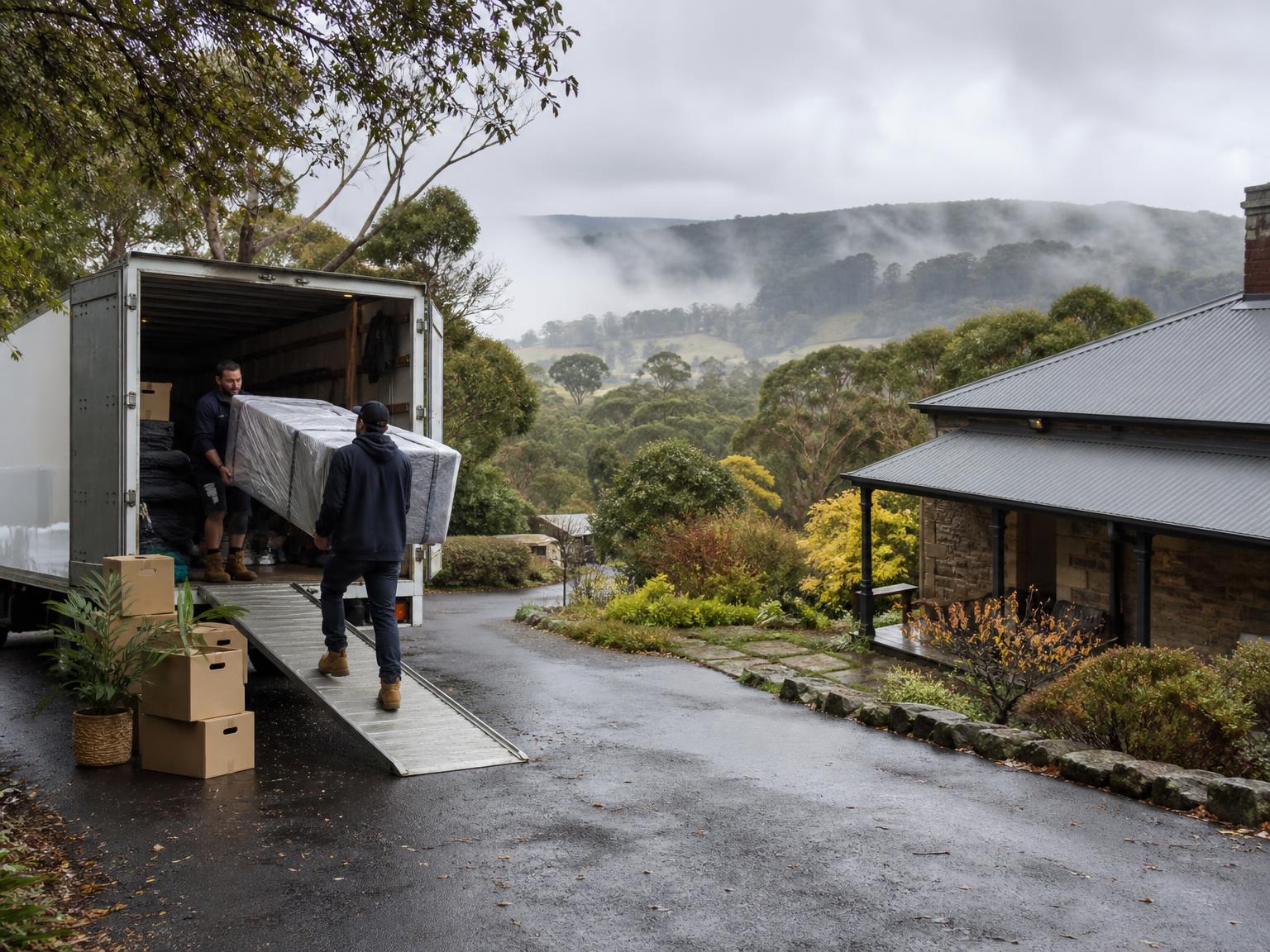
The direct answer is to inspect both properties before moving day, measure every tight access point, reserve the closest legal loading position and prepare a weather backup. In Adelaide’s hills, a steep driveway or long stair approach can matter more than the distance between addresses: it changes where the truck can stand, how far furniture must be carried and whether large pieces need to be dismantled. Allow at least 2 clear access options where possible—one for normal conditions and another if rain, heat or parked vehicles make the preferred route unsafe. Give your Removalists photos and measurements early rather than expecting the crew to solve an unseen access problem at the kerb.
Assess Hillside Access Before Booking
Start at the street and trace the exact route that furniture will follow. Check whether a removal truck can enter, turn and leave without reversing around blind bends, overhanging branches or sharply changing driveway levels. A driveway that suits a passenger car may still have a steep crest, soft edge or low canopy that prevents a larger vehicle from reaching the house. If the truck must remain on the street, estimate the carry distance and count every stair, landing and gate.
Record these practical details:
- Driveway width and height clearance, measured at the narrowest point
- Gradient changes, including crests where a truck may ground
- Stair numbers, turns and landing dimensions
- Gate, doorway and hallway widths
- Parking restrictions and times when school, commuter or visitor traffic is heaviest
- Alternative access, such as a lower garage, side path or rear entrance
Send clear photos taken from both directions. For a full household move, discuss these constraints with House Removalists before choosing the truck and crew arrangement.
Plan For Narrow Roads And Long Carries
Hillside streets can leave little room for a truck to stop without blocking a driveway or reducing visibility. Never assume that an empty kerb seen during a weekday inspection will remain available on moving morning. Speak with neighbours about bins, trailers and regular vehicles, while recognising that public road space cannot simply be claimed. The safest loading point must be legal, stable and visible to approaching traffic.
Where direct truck access is impossible, movers may need to use a smaller vehicle, stage items at a garage or carry them farther by trolley. Each extra transfer increases handling, so drawers should be emptied, doors secured and cartons kept within manageable weights. Use sturdy, consistently sized boxes rather than open tubs that cannot be stacked safely.
This differs from many jobs around the flatter City of Adelaide grid. Moves near Adelaide CBD, Rundle Mall or the South Australian Museum often centre on loading zones, lifts and building rules; in the hills, slope and turning room become the dominant constraints. Even North Adelaide access near Adelaide Oval can be more predictable than a long, steep residential approach.
Prepare For Heat, Rain And Wind
Adelaide’s Mediterranean conditions create 2 distinct moving challenges: hot, dry summer weather and cool, wet winter weather. On hot days, start early where scheduling permits, keep drinking water accessible and avoid leaving vinyl, candles, electronics or timber furniture in direct sun. The inside of a stationary truck can heat quickly, so sensitive belongings should be loaded late and unloaded promptly rather than waiting through a long access delay.
Winter rain changes grip on sloping paving, outdoor stairs, leaf-covered paths and polished entry floors. Place non-slip floor protection inside entrances, keep towels available and separate wet covers from clean furniture pads. Do not use loose plastic sheeting as a walking surface; it can become slippery and bunch under foot traffic. Strong wind also matters on exposed driveways because mattresses, flattened cartons and lightweight panels can catch like sails.
Weather can vary between a hills property and destinations closer to South Terrace, the Botanic Garden, Kent Town or Unley. Check conditions at both ends of the move and postpone handling that cannot be performed safely rather than forcing a heavy item across wet steps.
Protect Furniture And Older Interiors
Many Adelaide moves involve established homes with narrower passages, decorative thresholds, timber floors or additions that do not line up neatly with the original building. Hillside properties may also use split levels, undercroft garages and outdoor stairs to work with the slope. Measure the furniture itself—not just the doorway—and include protruding feet, handles and arms. A sofa that clears a front door may still fail at the next hallway turn.
Before carrying begins, remove loose shelves, wrap corners and identify pieces that should be dismantled. Use rigid protection on vulnerable door jambs and secure floor runners so they cannot slide downhill. Heavy cabinets should be emptied; leaving contents inside increases weight and allows the load to shift on stairs. For detailed preparation around period finishes, read protecting older floors and walls during an Adelaide move.
Pianos, safes and large appliances need separate planning because weight distribution and handholds matter on gradients. Book Heavy Item Removalists when specialised equipment or a dedicated access assessment is required. Never rely on a household trolley alone for a heavy item on wet, uneven or steep ground.
Use A Practical Moving-Day Sequence
Finish packing before the truck arrives and keep access equipment, keys and essential documents out of sealed cartons. A clear sequence prevents people crossing on narrow stairs and reduces repeated trips over the steepest section. If space is limited, load bulky items first, then stable cartons, while keeping immediate-use belongings separate for the destination.
A workable moving-day order is:
- Recheck weather and road access before departure.
- Move vehicles and bins away from the planned loading position.
- Protect floors, stairs and doorways before the first item is carried.
- Confirm the carry route with the crew and keep children and pets away from it.
- Load room by room, marking anything that must remain upright.
- Inspect the property before the truck leaves, including garages and outdoor storage.
Decluttering also reduces the number of carries on difficult access; use this Adelaide pre-move decluttering guide before packing. Best Removalists Adelaide is based at 15 Davenport Tce, Wayville SA 5034 and operates Mon–Sun, 7am–9pm. When requesting a quote, provide access photos, stair counts, carry distances and the moving date so the plan reflects the actual hills conditions rather than a standard kerbside move.